
Cumberland's Draft Puts Utility Readiness in Writing
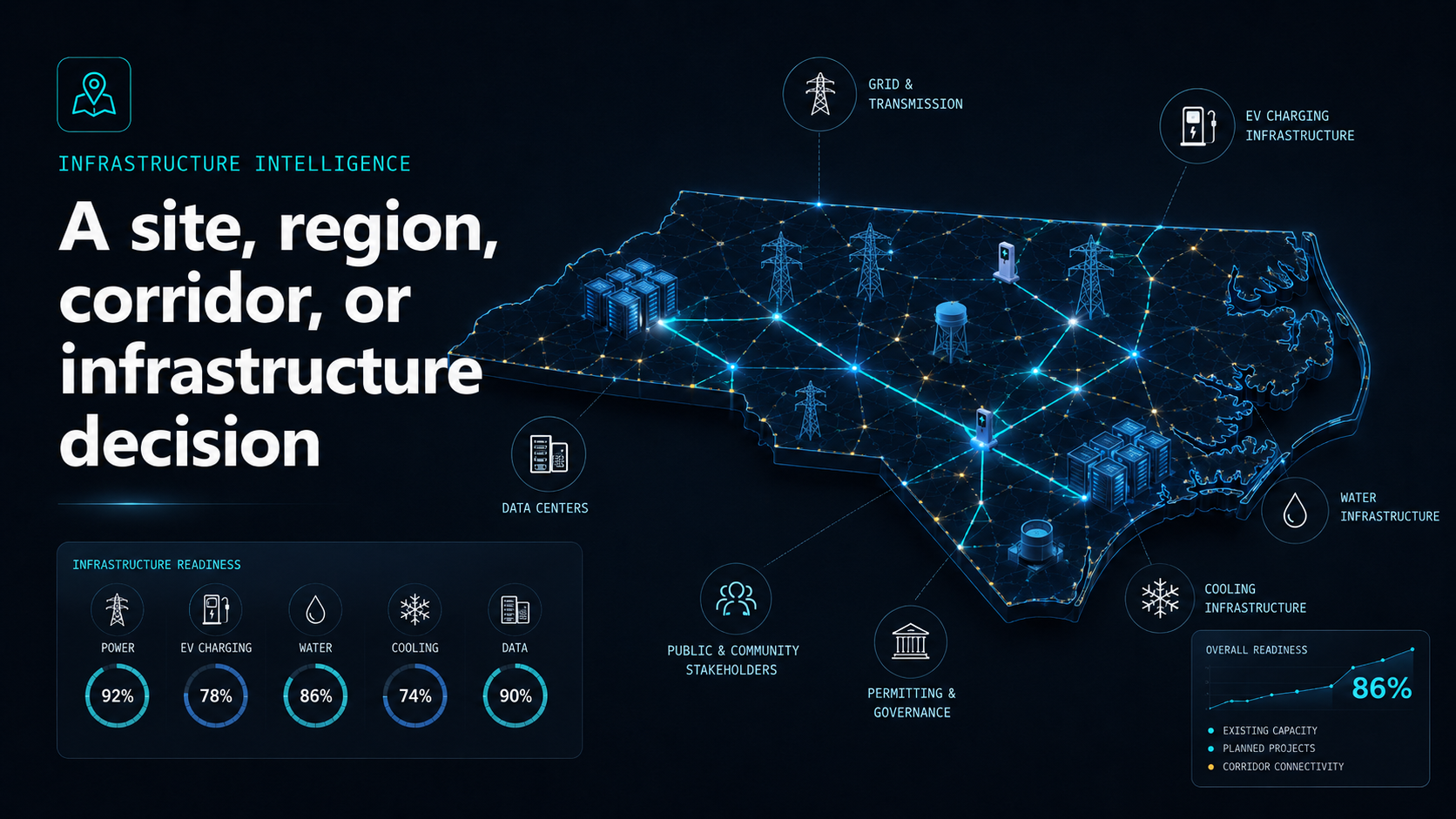
Cumberland County's proposed data-center standards would require electrical and water providers to attest to peak-load capacity while continuing service to other users. Staff say proposed SB 730 use requirements were incorporated into the draft even though the bill remains pending. Atlas is tracking a shift from pauses toward documented readiness conditions, alongside Charlotte's permit exemptions and Fayetteville's conditional rules. A pause is not a reset of existing entitlements. The next question is what evidence local standards would require before an application advances. Cumberland's Planning Board recommendation is unanimous; county adoption is not confirmed.
Key Signals
- Cumberland's October 20 staff report records unanimous Planning Board approval of its draft, not county enactment. Proposed Section 905.2 E would require written attestations from electrical and water providers: capacity at peak operations while serving other users, infrastructure that can safely accommodate the use, and no interference, fluctuations, or service disruptions on or off premises, including fire service. Staff explicitly say proposed SB 730 use requirements were added to the attached draft. This is incorporation into a proposal, not enactment of the bill or proof that capacity exists.
- Cumberland's proposed Section 905.2 A sets an 800-foot property-line minimum for buildings and operating equipment, including generators, fuel storage, and substations. Specified VAD-buffer or residential conditions increase setbacks by 50% across the parcel, making the base 1,200 feet. Listed sensitive uses have a separate 2,000-foot structure-to-structure separation. The draft bars reductions through rezoning, variance, or other requests, protects against nonconformity caused by later sensitive uses, and permits standard district setbacks only under its four-part industrial-area exception.
- Other Cumberland draft provisions require closed-loop or recycled cooling, prohibit evaporative cooling and direct well or surface-water intake, limit generator testing to 9 a.m.-7 p.m. weekdays excluding specified holidays, and require licensed-acoustical-engineer analysis at full operational capacity without the county noise ordinance's exception/waiver provisions. Certain analysis requirements have a separate industrial-area exception. A distinct power-generation class carries different electrical-attestation provisions and bars on-site nuclear reactors while allowing power from lawful off-site public-utility reactors. Both use classes would require conditional zoning in industrial districts. These remain proposed standards, separate from Richmond's issued engine air permits.